The types of stainless steel pipe at a glance
- Stainless steel contains at least 10.5% chromium, but performance changes significantly with alloying elements like molybdenum and titanium
- 304/304L is the standard workhorse for mild industrial environments
- 316/316L offers improved resistance to pitting and crevice corrosion in mild chloride and coastal exposure
- 321 is selected where temperature stability matters more than chloride resistance
- 430 suits mild or indoor environments, but is rarely appropriate outdoors near the coast
- Duplex 2205 provides higher strength and improved corrosion resistance, where 316 may be marginal
- In coastal Australia, ASSDA recommends 316 as a minimum within 5 km of the surf, with duplex often required in harsher zones
- Grade selection only works when it’s paired with the right joining method, surface condition and installation discipline
What stainless steel pipe types actually mean
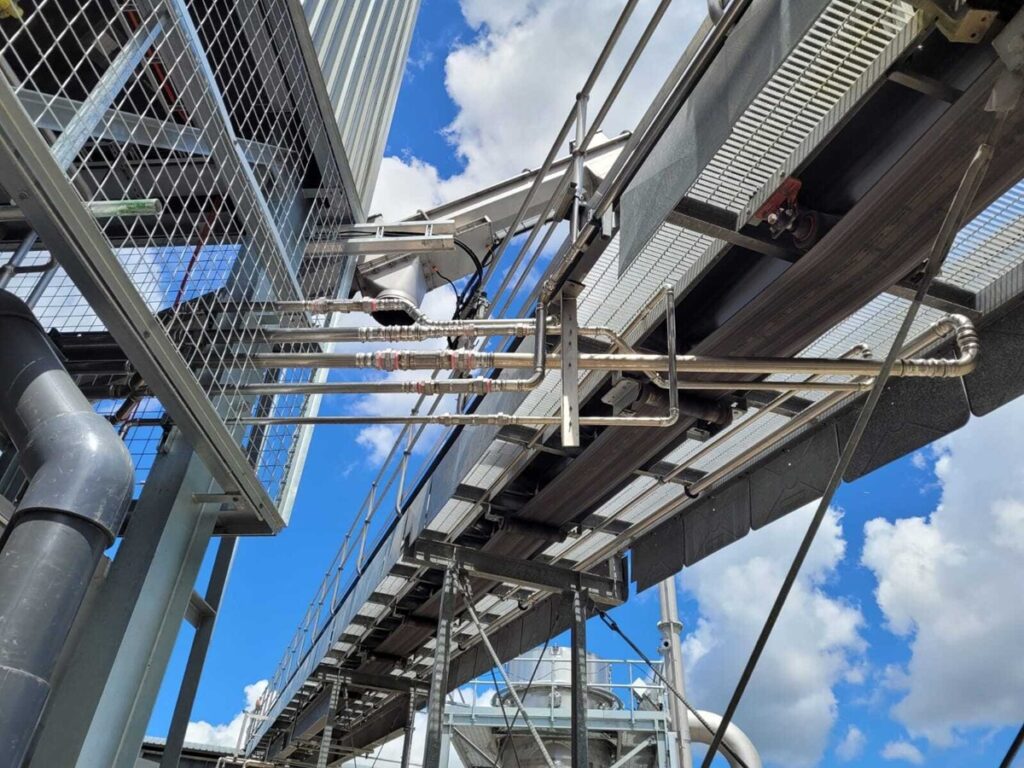
Stainless steel pipe isn’t one single material; it comes in different types, each designed for specific environments and performance demands.
That composition controls how well the material forms and maintains its passive chromium oxide layer, the thin surface film that gives stainless steel its corrosion resistance.
In practical terms, different types of stainless steel pipe matter because environments vary.
A clean, indoor service line presents very different risks compared to a coastal fire system, a washdown-heavy food plant, or a remote mining installation. Once chlorides, heat, aggressive chemicals or long design lives enter the equation, selection becomes a risk decision rather than a cost one.
Stainless steel families
Most stainless steel pipe used in industrial applications falls into four main categories. These types are defined by their internal structure and performance characteristics.
Austenitic stainless steels
Types such as 304, 316 and 321 sit in this family. They’re the most widely used in industrial piping because they balance corrosion resistance, toughness and fabrication ease.
Ferritic stainless steels
Ferritic stainless steel types, such as 430, are magnetic and more cost-effective, but are best suited to mild or sheltered environments.
Martensitic stainless steels
Martensitic stainless steel types prioritise hardness and wear resistance. They’re common in shafts and components, but far less so in general pipework.
Duplex stainless steels
Duplex stainless steel types like 2205 combine high strength with strong corrosion performance, particularly where austenitic stainless steel types are approaching their limits.
You don’t need to memorise the metallurgy, but understanding the family gives context for what each stainless steel pipe type is designed to handle.
Common stainless steel pipe types in industrial use
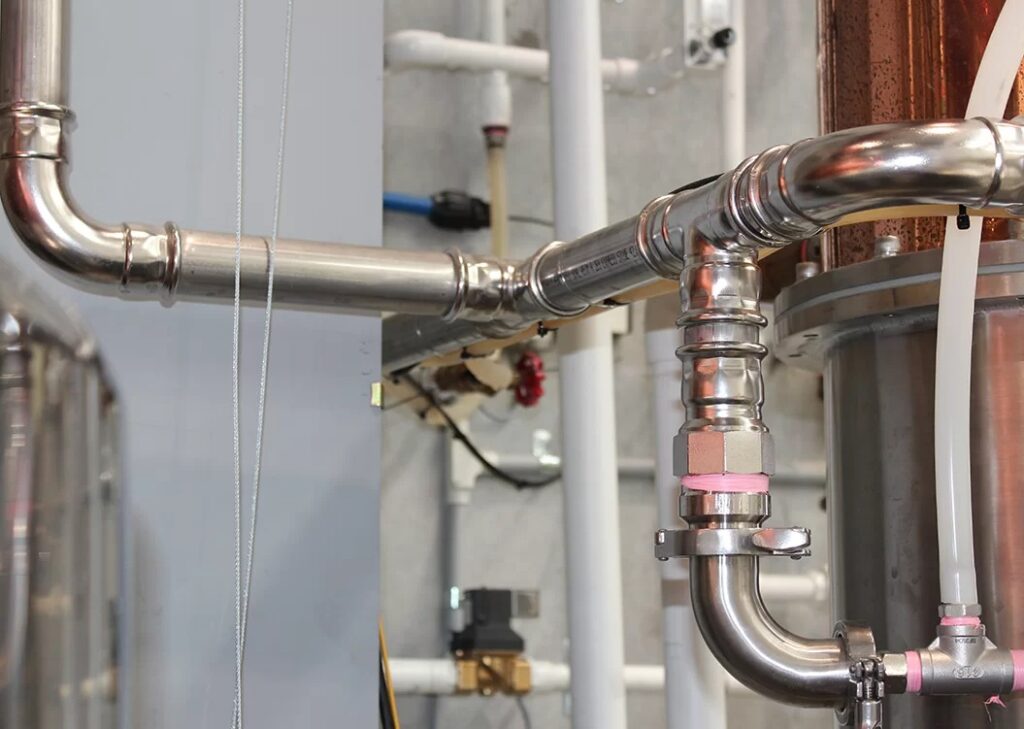
304 / 304L: The general-purpose baseline
Type 304 stainless steel pipe is where most projects start.
It’s widely available, easy to fabricate, and performs reliably in mild industrial environments where chloride exposure is low.
The low-carbon variant, 304L, is commonly specified when welding is involved, as it reduces the risk of corrosion developing in heat-affected zones over time.
You’ll typically see 304/304L used in:
- General industrial pipework away from the coast
- Inland food and beverage facilities with controlled cleaning regimes
- Building services where higher alloy grades are not required
The limitation is straightforward. Once chloride exposure increases, 304 is usually the first type to show its weaknesses.
For lighter-duty, weld-free installations in suitable environments, Ibex offers the Express® 304L stainless steel press fit system as a practical option.
316 / 316L: Chloride resistance where it counts
If Type 304 is the baseline, Type 316 stainless steel pipe is typically specified when the corrosion risk increases
The difference lies in molybdenum. This alloying element significantly improves resistance to pitting and crevice corrosion, particularly in chloride-bearing environments such as coastal air, process salts and washdown zones.
316L is the low-carbon version and is commonly specified where welding or long-term durability is critical.
316/316L is widely used in:
- Coastal and marine-influenced sites
- Chemical and process industries
- Water and wastewater infrastructure
- Hygienic and pharmaceutical environments
ASSDA’s guidance is clear. Within 5 km of the surf, 316 should be treated as the minimum material type, with duplex stainless steel often required in harsher splash zones or unwashed areas.
This is where Ibex’s 316L press-fit systems, such as Impress® stainless steel press fit and Tubepress® high-pressure press fit, are commonly specified, combining corrosion resistance with weld-free installation.
321: When temperature is the driver
321 is often misunderstood as a “better 304”.
In reality, it addresses a different problem.
By stabilising the alloy with titanium, 321 performs more reliably after exposure to elevated temperatures and thermal cycling. This makes it relevant for hot process services where temperature stability is the primary concern.
If chlorides are driving corrosion risk, 316 or duplex is usually the better choice. If heat exposure is the challenge, 321 becomes part of the conversation.
430: mild-environment stainless
430 is a ferritic stainless steel used where corrosion demands are moderate.
It’s typically specified for:
- Indoor or sheltered environments
- Architectural and trim applications
- Mild industrial exposure
ASSDA notes that lower-alloy types such as 430 can tea stain or corrode more rapidly in marine environments. For that reason, it’s rarely suitable for outdoor or coastal pipework.
Duplex 2205: when 316 is close to the edge
Duplex 2205 is generally specified when:
- Chloride severity is high
- Strength requirements increase
- Lifecycle expectations push beyond standard austenitic stainless steel types, which can reliably handle
It offers significantly higher yield strength than 304 or 316, along with strong resistance to chloride stress corrosion cracking in appropriate service conditions.
Common applications include:
- Oil and gas infrastructure
- Desalination and brine handling
- Aggressive coastal installations
- Chemical processing (subject to compatibility)
Duplex stainless steel requires disciplined fabrication and installation procedures, but in the right applications, they provide a strong balance of strength and durability.
Stainless steel pipe type comparison table
| Stainless Steel Type | Best-fit environment | Key advantage |
| 304 / 304L | Mild, inland industrial | Cost-effective general-purpose stainless |
| 316 / 316L | Coastal and mild chloride exposure | Improved pitting and crevice resistance |
| 321 | Elevated temperature service | Stability under heat and thermal cycling |
| 430 | Indoor or mild environments | Economical ferritic option |
| 2205 | Aggressive chlorides, high stress | Duplex strength and corrosion performance |
What actually drives material selection on site
In practice, stainless steel pipe type selection usually comes down to five key considerations. Understanding these factors is essential when evaluating the different types of stainless steel pipe for a given project.
Chloride exposure
Chlorides are common across Australian sites, from coastal air and washdown systems to mine water and process brines. Coastal projects should align early with ASSDA guidance to avoid premature corrosion. Grade 316 stainless steel performs reliably in tap water with chloride levels below 250 parts per million — which covers essentially all municipal water supplies across Australia. Note high temperatures increase the aggressiveness of chlorides.
Pitting and crevice corrosion risk
Pitting often initiates at clamps, brackets, insulation interfaces or stagnant zones. Stainless steel pipes with molybdenum, such as 316, offer improved resistance compared to 304.
Stress corrosion cracking
In hot, chloride-bearing environments, duplex stainless steel can offer greater resistance than standard austenitic stainless steels.
Temperature and thermal cycling
Where elevated temperatures or repeated heating and cooling are involved, stabilised stainless steel pipes like 321 may be more appropriate than simply upgrading corrosion resistance.
Fabrication and weldability
Low-carbon “L” grades reduce sensitisation risk in welded sections, improving long-term corrosion performance.
Compliance in Australia
For regulated plumbing and drainage product categories, WaterMark certification is mandatory.
For metallic fittings and end connectors used with stainless steel pipe, AS 3688 is a key reference point.
Where building plumbing and drainage work is involved, designs should align with the current edition of AS/NZS 5200 &AS/NZS 3500.
The practical takeaway is simple. Selecting stainless steel pipe type is technical, but compliance is contractual.
Joining method matters: why weld when you can press?
Even the right pipe can fail early if installation introduces poor weld quality, crevices or inconsistent QA.
That’s why the joining method matters.
Ibex press-fit systems eliminate welding, brazing and soldering in many applications by using mechanical press connections, reducing hot work permits, improving repeatability and shortening installation time.
In suitable conditions, Ibex notes press-fit installation can be more than 10 times faster than conventional welding, particularly in live industrial environments where shutdown windows are tight.
The 5-step process that protects quality
Press-fit performance relies on installation discipline:
- Cut
- Deburr
- Witness mark
- Assemble
- Press
Witness marks provide a simple but effective control that supports inspection confidence and long-term system integrity.
Matching press-fit systems to duty
- Tubepress® 316L stainless steel press fit system for high-pressure critical services
- Impress® 316L press fit system for general industrial stainless applications
- Express® 304L press fit system for cost-sensitive, mild-duty environments
Technical documentation is available via Ibex product brochures and technical information.
Kookaplumba fire sprinkler system: Quality steel in action
Seeing the right types of stainless steel pipe in a real-world installation is worth more than any datasheet. The video below showcases a fire sprinkler system completed by Kookaplumba, built using Ibex quality stainless steel.
Watch the full project video: https://www.youtube.com/watch?v=i87vlRssZCU
The sprinkler setups showcased in the video are made from Ibex quality steel, demonstrating the kind of finish, durability and corrosion resistance that comes from selecting the right material and the right supplier.
Fire service pipework is one of the most demanding applications for stainless steel pipe. It requires long-term reliability across decades, resistance to corrosion even in harsh or coastal conditions, and consistent quality throughout the system. The Kookaplumba project is a strong example of what quality steel looks like when it’s installed with care.
Why it matters
Fire sprinkler systems place long-term reliability ahead of short-term cost. Stainless steel selection for these systems typically prioritises:
- Corrosion resistance over decades
- Site constraints and hot work restrictions
- Repeatable QA for critical services
- Compliance confidence
When evaluating different types of stainless steel pipe for fire protection applications, the combination of the right grade, a quality supplier and disciplined installation makes all the difference.
How Ibex can help
Selecting the right stainless steel pipe is only part of the equation.
Across industrial projects, we’re often brought in once teams start weighing up corrosion risk, installation constraints, compliance requirements and long-term maintenance — not just material cost.
At Ibex, we work alongside engineers, specifiers and contractors to:
- Validate selection against real-world Australian environments
- Align material choice with press-fit installation to reduce hot works and labour time
- Support compliance pathways using proven, documented systems
- Help teams balance upfront decisions with long-term reliability and total installed cost
Whether you’re still at the concept stage or refining a live specification, our role is to help pressure-test assumptions before they become on-site problems.If you’d like to talk through a project, you can contact the Ibex Australia team or submit an enquiry, and we’ll point you in the right direction.
Frequently Asked Questions
- What are the most common stainless steel pipe types?
304/304L, 316/316L, 321 and duplex 2205 are the most commonly compared stainless steel pipe types in industrial piping.
- Is 316 always better than 304?
No. 316 performs better in chloride environments, but 304 is often appropriate in mild inland conditions.
- When should I use 321 stainless steel?
When elevated temperature exposure or thermal cycling is the primary driver.
- Is duplex 2205 overkill?
Not when chloride severity, stress or lifecycle expectations exceed what 316 can reliably handle.
- Do I need WaterMark certification?
For certain plumbing and drainage product categories, WaterMark certification may be mandatory.
- How do I choose between the different types of stainless steel pipe?
Start by assessing your environment, chloride exposure, temperature demands and lifecycle expectations. This guide covers the key factors, and the Ibex team can help you validate your selection against real-world conditions.