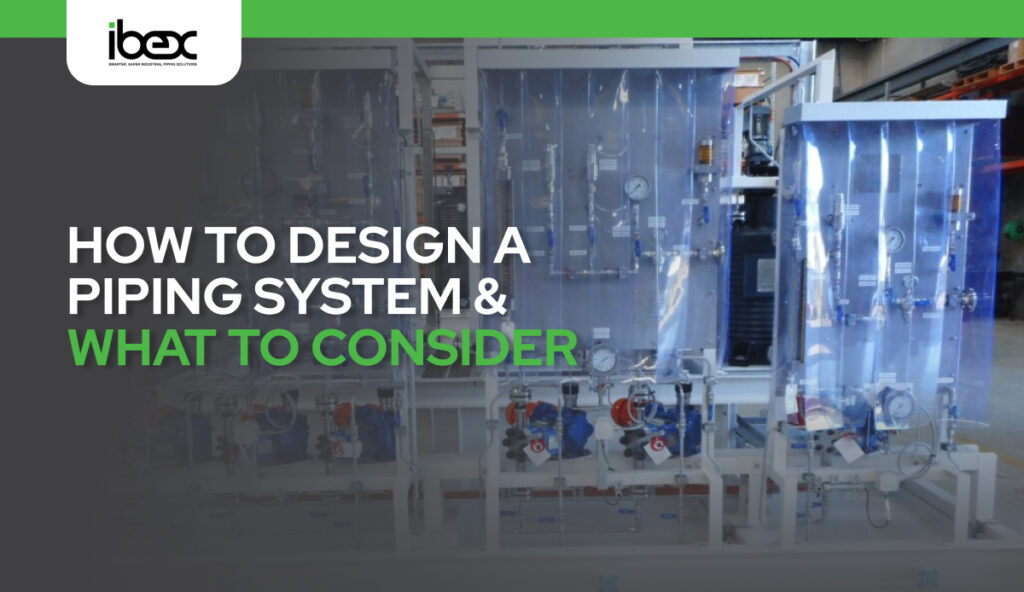
Every successful piping system starts with a well-planned design. At Ibex, we’re here to support you at every stage, from concept to post-installation, so your system performs exactly as intended.
That’s why we’ve created this simple guide filled with helpful tips for designing a piping system that works in the real world. Whether you’re planning a high-rise or coordinating services in a tight plant room, these insights will help you design with confidence.
Plus, we’ll show you how Ibex’s certified press-fit solutions, including Vis-Lok compression fittings, along with our detailed BIM drawings, can streamline your next project with the reliability and efficiency you need.
A Word of Guidance
This article is a practical overview to help you think through a piping design; it’s not a full design standard, engineering specification, or substitute for professional advice. Every project has unique risks, loads, media, site constraints, and compliance requirements. Always:
- Verify all designs against current codes and standards (e.g. AS/NZS 3500 and any other applicable Australian standards), local authority requirements, and project specifications.
- Follow the latest manufacturer instructions, product datasheets, and certifications (e.g. WaterMark) for selection, installation, testing, and maintenance.
- Engage a suitably qualified engineer and licensed installer to review, document, and sign off on the design and installation.
- Conduct project-specific risk assessments, pressure tests, and commissioning in line with statutory and site requirements.
If you’re unsure about any part of your piping design or need guidance choosing the right fittings and materials, Ibex is here to help. Our technical team can walk you through product options, compliance requirements, and practical installation advice — so you can move forward with confidence knowing your system is designed to perform safely and efficiently.
1. What does the system need to achieve?
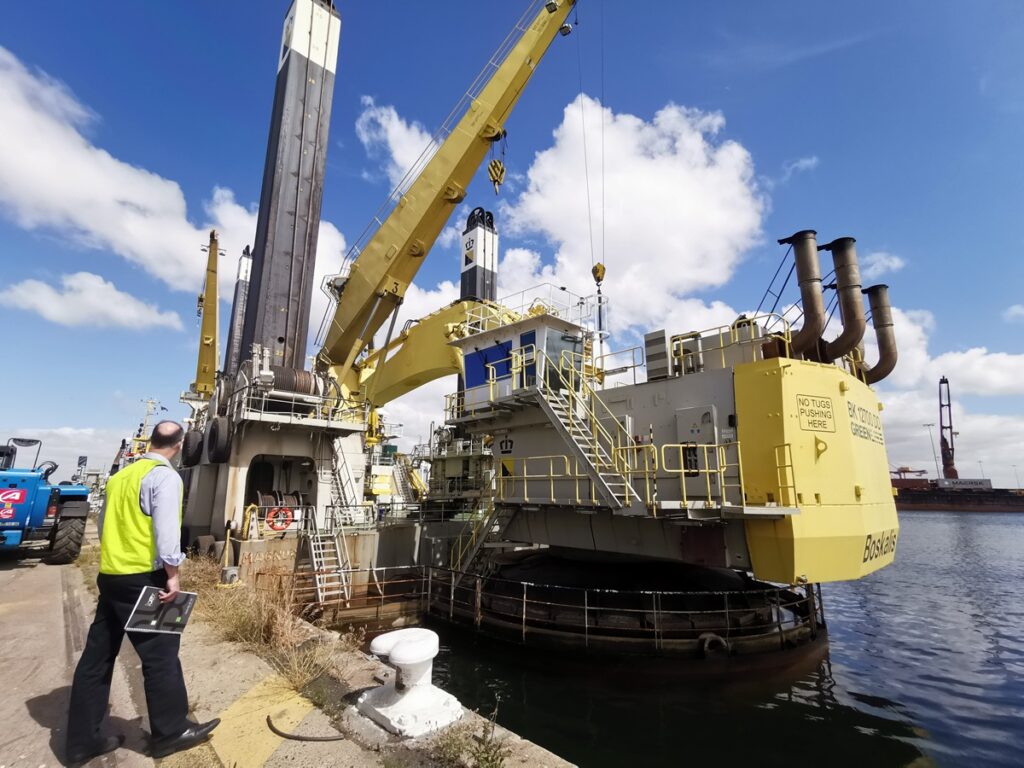
Before selecting fittings or diving into spec sheets, it’s essential to understand what the system actually needs to achieve. Without that clarity, even the most detailed piping design can miss the mark.
A clear picture of performance requirements sets the foundation for smoother approvals, fewer design changes, and a system that’s truly fit for purpose.
There are four key parameters that significantly influence every decision made in the planning stage. To ensure your final system stands up to real-world conditions, take a moment to get across these critical areas first:
Flow requirement
Flow rate is the backbone of how you size and specify every component in the system. Start by identifying the required flow for each section, based on:
- Average flow: The expected volume moved during normal operation.
- Peak flow: The highest volume the system may need to handle — whether daily, seasonally or under specific operating conditions.
- Redundancy: A safety margin in case part of the system is offline or demand temporarily spikes.
Let’s say, for example, you’re designing a chilled water system for a commercial building. Most of the time, moderate flow is enough. But on hot days, when every air conditioning unit is running flat out, demand can surge.
Your pipework, fittings and pump selection all need to be able to cope, without causing excessive pressure drop, excessive pipe size or unnecessary cost.
Pressure and temperature range
Understanding pressure and temperature isn’t just about staying within limits. It’s about making sure every part of the system stays stable, safe, and durable under real-world conditions.
So, start by clarifying the full range the system will operate within:
- Maximum pressure: Account for dynamic surges that occur during pump start-up, valve closure, or sudden changes in system flow.
- Minimum pressure: Factor in long pipe runs, elevation changes or high-resistance sections that could cause pressure to drop below safe operating levels.
- Temperature extremes: Identify how hot or cold the system will get during normal operation, cleaning cycles, or shutdown/start-up periods.
For example, in a hot water recirculation loop, the system might operate steadily at 65–70°C. But during sanitisation, those temperatures can spike significantly higher.
If the system hasn’t been designed for that full range, fittings and pipework may degrade faster, leading to leaks, failures or safety issues down the track.
Those temperature swings also create physical movement. As pipes expand and contract, they need space and flexibility to move safely. That’s where expansion loops, flexible supports and proper allowances become critical.
And the type of connection you use plays a big role. Compression fittings like Ibex’s Vis-Lok are purpose-built to handle thermal movement more effectively than traditional welded or threaded joints. There’s no risk of heat-affected zones, no need for post-weld treatment, and no compromised seals under thermal cycling.
That means fewer long-term issues, faster installation, and greater confidence that your joints will stay secure.
Media type
After defining pressure, temperature and flow, the next critical variable is the media itself. What’s inside the pipe—whether liquid, gas, or a mix—shapes everything from material selection to risk management.
Not all media behave the same way. Some demand corrosion resistance. Others require certification. And certain media can become more aggressive when temperature or pressure fluctuates, compounding the design challenge.
Here are some key questions to ask:
- Is it chemically aggressive?
Substances like glycol in chilled water loops, greywater, industrial chemicals, or reactive gases can break down materials over time. Your fittings and pipework need proven compatibility and long-term durability under those conditions.
- Is it potable?
Drinking water requires certified, non-leaching materials. The same principle applies to breathable gases, which must be delivered through clean, contamination-free systems. Stainless steel, particularly 316, is widely used for its safety, performance and compliance with WaterMark and other relevant standards.
- Is it pressurised or gravity-fed?
This affects both joint integrity and material stress. Pressurised lines—whether for liquids or gases—introduce higher forces that require secure, fully restrained connections.
Understanding the media also prevents unnecessary over-engineering. If you’re running clean, cold water or an inert gas in a non-corrosive environment, you may not need the highest-spec fittings, saving cost without sacrificing reliability.
But where the media is hot, hazardous or chemically active, the opposite is true: the design must reflect those risks right from the start. Better to address them now than fix failures later.
Site layout
Once you understand what’s flowing through the system and how it behaves, the next consideration is where it’s going. The physical layout of the site plays a major role in how you route pipework, select materials, and plan for access, support, and long-term maintenance.
Key layout factors to address:
Elevation changes
Tall vertical risers increase static pressure at the base, which can overstress joints if not properly accounted for. Reinforced fittings and pressure zoning help maintain safe, reliable operation across multiple levels.
Confined spaces and access
Ceiling voids, riser shafts and cramped plant rooms often restrict movement and limit tool clearance. In these environments, compact fittings and press-fit connections allow for faster, safer installs with no need for hot works.
2. Choose materials based on performance and environment
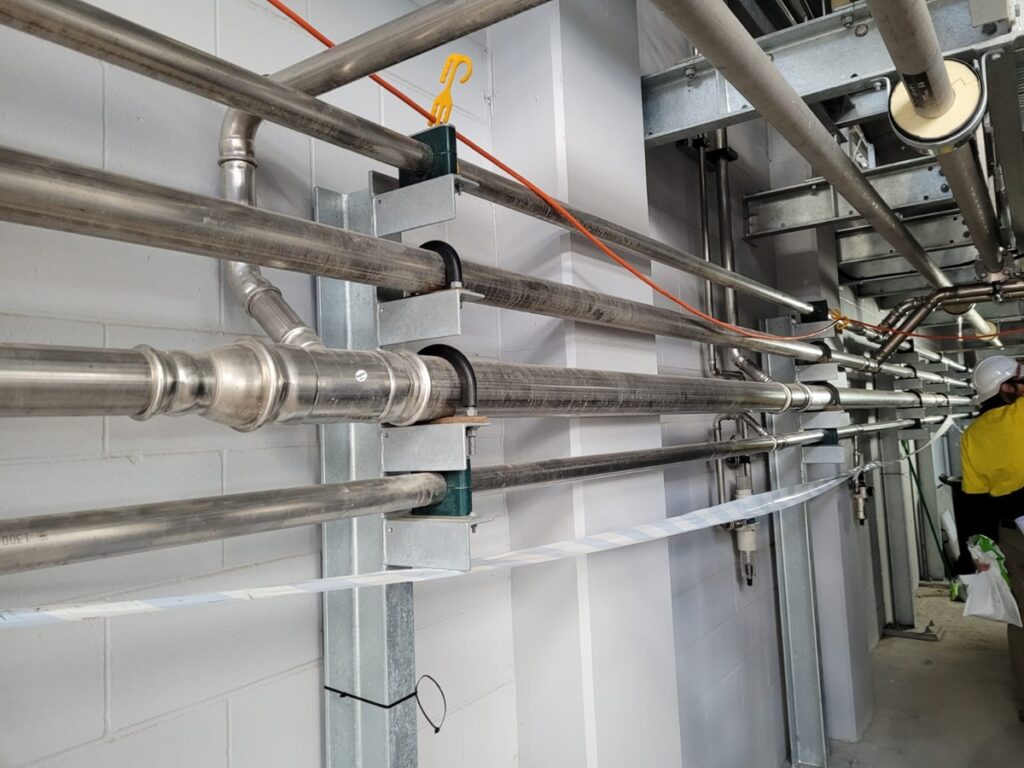
Once your system parameters are set, it’s time to select materials that will deliver reliable performance over the long term. This stage is where many important decisions are made, including opportunities to optimise both performance and cost. But it’s also where risks can arise if choices are based only on habit or headline pricing.
The right material isn’t necessarily the cheapest or the most familiar; it’s the one that delivers reliable performance over time. That means looking beyond basic specs to consider factors like corrosion resistance, compatibility, ease of installation, and long-term dependability.
Here’s a clear breakdown of what to assess:
Corrosion performance across environments
Corrosion doesn’t show up the same in every environment. What threatens a pipe under a concrete slab, for example, isn’t the same as what corrodes it near the coast or in a damp plant room. That’s why it’s critical to select materials that reflect the specific exposure risk of your site.
Example: 316L stainless steel performs well in many harsh environments, but it’s especially valuable in mixed-use developments.
Pipework in these settings often spans indoor air-conditioned spaces, damp basement carparks, and outdoor areas, each with different levels of moisture and exposures. Because 316L offers consistent corrosion resistance across all these conditions, it helps eliminate hidden weak points and ensures longer system life.
Holding strength under real-world loads
Designing to pressure and temperature specs is one thing. Designing for fluctuating or sustained loads is another. Not all materials hold their strength when exposed to prolonged heat, pressure cycling or vibration.
Example: In industrial recirculation loops that run 24/7, metal fatigue can build up even when pressure and temperature are within stated limits. Higher-grade stainless solutions with robust wall thickness resists fatigue and creep, maintaining integrity over time without the need for constant re-torquing or visual inspections.
Chemical compatibility
What’s flowing through the system is just as important as where it flows. Some fluids, like greywater, glycol mixes or cleaning agents, are harsher on materials than they first appear. The impact may not be immediately visible in the pipe wall, but can show up in the seals, gaskets or internal coatings that aren’t chemically compatible.
Over time, that kind of mismatch can cause leaks, contamination, or full system failure, even if everything looked fine during commissioning.
Example: In a hydronic HVAC loop running a glycol solution, the stainless steel pipe may handle the media well, but if the O-rings inside your fittings aren’t rated for glycol exposure, they can swell, harden or crack. That turns a sealed joint into a potential leak, and in critical applications, a small leak is a big problem.
Installability under site constraints
Speed, safety and joint reliability matter, especially on retrofit projects, live sites or fast-tracked builds. The easier a system is to install without compromising quality, the smoother your project delivery becomes.
Example: In healthcare or food production facilities where shutdown windows are limited, flame-free systems like Ibex’s Vis-Lok allow for safe, repeatable joints without fire permits or specialist welders — all while maintaining pressure and temperature ratings suitable for critical systems.
3. Select the right connection method
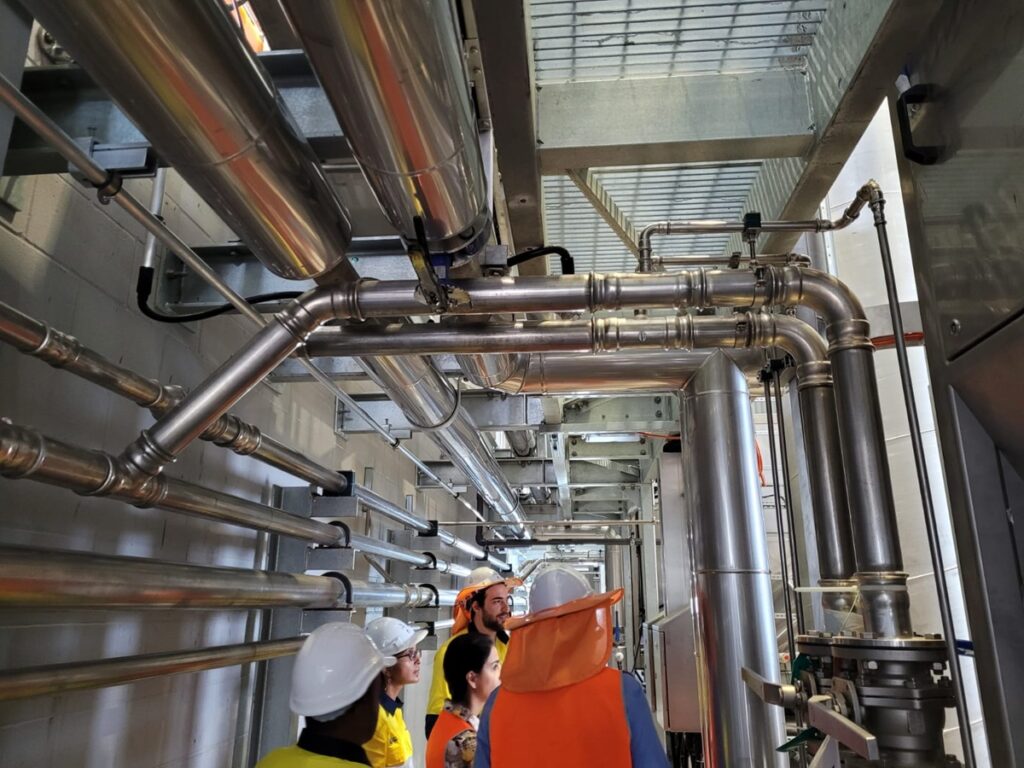
Once you’ve nailed your system demands and chosen materials that can handle the job, it’s time to decide how you’re going to put it all together. Your connection method isn’t just a mechanical detail. It has a big impact on safety, installation time, maintenance and overall system reliability.
In many ways, the connection type is where design plans meet real-world challenges. It affects how easily you can work in tight spaces, whether you need special permits, how the system handles thermal movement, and how it performs years down the track.
Here’s a practical breakdown of your main options:
Welded and flanged connections
Welding and flanged joints have long been the go-to for heavy-duty or high-pressure systems. They’re robust, widely understood, and can handle significant mechanical loads.
But here’s the trade-off:
- Hot work permits and fire risk: Any hot works introduce safety risks and require extra permits and precautions, especially in sensitive environments like hospitals or food production facilities.
- Skilled labour dependency: Welded systems need highly trained installers and often slow down project schedules if those resources are scarce.
- Longer installation times: Each joint needs careful prep, welding, inspection, and often post-weld treatment to prevent corrosion or stress failures.
Welded solutions still make sense in certain heavy industrial or critical infrastructure contexts, but for many commercial and building services applications, these drawbacks can outweigh the benefits.
Threaded fittings
Threaded connections are common for smaller diameter pipes, simple retrofits, or budget-conscious jobs. They’re easy to assemble with basic tools and don’t require welding skills.
However, they come with their own limitations:
- Leak risk: Threads can loosen over time, especially when exposed to vibration or thermal cycling. A small leak in a mechanical plant room or ceiling void can lead to costly repairs later.
- Alignment challenges: Misalignment during assembly can strain the threads and compromise sealing.
- Limited scalability: For larger systems or higher pressures, threads quickly become impractical and unsafe.
Threaded fittings have their place, but they’re not always the right choice when reliability and long-term performance are priorities.
Press-fit systems
Press-fit technology has grown rapidly in popularity for a reason: it combines mechanical strength with faster, safer installation.
Key benefits include:
- Flame-free installs: No hot work means no fire watch, no permits, and no risk of heat-affected zones that could weaken metal over time.
- Speed and efficiency: Joints can be completed in seconds using a press tool, significantly reducing installation time. This is a major advantage on tight schedules or live sites.
- Reliable, consistent sealing: Properly pressed connections offer high resistance to pressure and vibration, with consistent results across hundreds of joints.
- Reduced downtime: In retrofit or upgrade scenarios where shutdown windows are tight, press-fit systems let teams get in and out faster without sacrificing joint quality.
Ibex’s press-fit systems, like Impress Press Fit, are built to keep up with the real demands of Australian sites. They’re engineered for high pressures, extreme temperature shifts, and a wide range of fluids, so you’re not just relying on lab specs, but proven field performance.
From tight ceiling spaces in hospitals to multi-storey risers and food-grade washdown areas, Vis-Lok lets you complete connections quickly and confidently, all without flames or heavy welding gear. That means faster installs, fewer risks and a smoother run from day one.
4. Design a logical layout
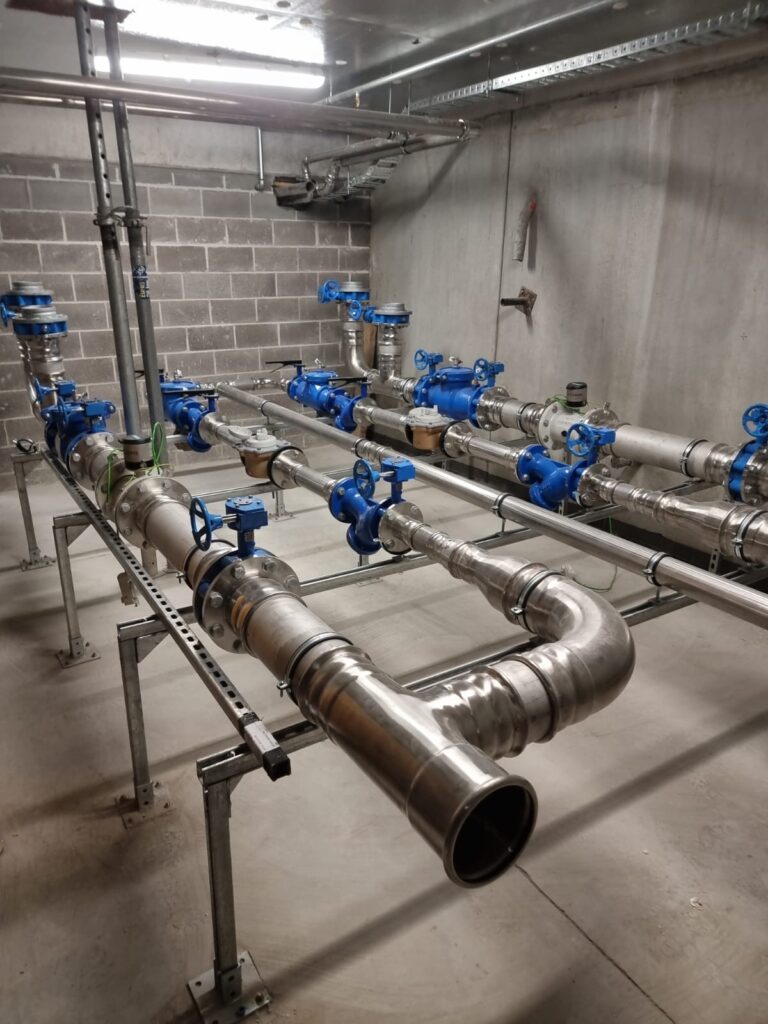
Even the best materials and strongest joints won’t save a system that’s awkwardly routed or impossible to service. A smart layout is the bridge between good design on paper and reliable performance on site.
A well-planned piping layout does more than connect point A to point B. It reduces energy use, extends system life, and simplifies maintenance for years to come.
Here’s what to prioritise:
Manage head losses effectively
Every extra bend or long horizontal run introduces friction and pressure drop. By designing routes that are as direct and smooth as possible, and choosing the right pipe diameter from the start, you help pumps work more efficiently and keep operating costs down.
Allow for thermal movement
As pipes heat up and cool down, thermal expansion and contraction occur. Without proper allowances, that movement can stress joints, push on supports, and eventually lead to leaks or cracks. Expansion loops, sliding supports and carefully positioned anchors help control that movement and keep your system stable under all operating conditions.
Optimise support spacing
Pipe supports aren’t just there to look good. They prevent sagging, vibration and mechanical fatigue. Choosing the right hanger type and spacing based on pipe material and diameter ensures your system remains properly aligned and the load is evenly distributed.
Maintain service access
No one wants to dismantle a ceiling or rip out a riser wall just to reach a valve. That’s why key components like isolation valves, strainers and flow meters should be located where technicians can reach them safely and quickly. This foresight pays off in smoother commissioning, simpler inspections and fewer surprises during repairs.
But even with these principles in place, a layout only works if it reflects how the system will be built and maintained. That’s where design tools come in. They help you visualise access, spacing and clash risks before they become on-site problems.
Building your system digitally in 3D, through BIM (Building Information Modeling), allows you to see exactly how your pipes interact with other services and structural elements before the first bracket is even fixed. You can check clearance, identify support conflicts, and plan for thermal allowances — all before anyone touches any tools.
5. Use Ibex BIM to design with real-world confidence
Digital modelling is powerful. But its value depends on the quality of the components you use. Generic placeholders might get you through a concept stage, but they won’t help when it’s time to coordinate trades, generate submittals or ensure compliance.
That’s why Ibex’s BIM library is built for real-world performance. Instead of guessing dimensions or connection types, you’re working with pre-modelled, specification-ready fittings and valves that match exactly what will arrive on site.
From clash detection to documentation, accurate BIM content helps you close the gap between what’s designed and what’s delivered. This reduces risk, saves you time and makes life easier across the entire project lifecycle.
Let’s explore how:
Pre-modelled accuracy
Every item in the Ibex BIM library includes precise dimensions, connection types and fitting geometries. That means fewer surprises during installation, better coordination between trades, and complete confidence that what you model is what you’ll install.
Built-in product data
No more flipping between tabs or chasing spec sheets. Each component includes embedded data like pressure ratings, material specs, certifications and weights. So when you need to generate submittals or bills of materials, the information is already there.
Reliable clash detection
With accurate geometry, you can run meaningful clash detection that catches spatial conflicts before they happen. This helps streamline MEP coordination, reduce on-site fixes, and keep your construction schedule on track.
Fewer RFIs and faster approvals
Designs built on accurate, data-rich models stand up to scrutiny. That means fewer back-and-forth queries, less time spent rewriting documentation, and quicker green lights from clients and certifiers alike.
6. Keep it compliant and documented

A piping system isn’t truly complete until it’s complianthgjytjkyf and documented to prove it. Even the best-designed installation can face delays or disputes if it doesn’t meet local codes, product certification requirements, or quality assurance expectations.
That’s why compliance and traceability need to be baked into the design, not left to resolve on site.
Let’s break down what your documentation and compliance package should cover:
WaterMark certification
All fittings and pipes in regulated plumbing systems must carry WaterMark approval. It’s your assurance that materials meet Australian safety and performance standards. And it’s your safeguard against rework or rejection during inspection.
AS/NZS 3500.1 compliance
Designing to the Australian standard for plumbing and drainage — and adhering to broader industry standards and guidelines — ensures your layouts, slopes, clearances and materials all conform to what’s legally required. This standard forms the foundation for building approvals, inspections and long-term operational safety.
Traceable documentation
Certifications and batch tracking don’t just help at audit time; they make it easier to identify and replace components if issues ever arise. From delivery to installation, your components should come with clear paperwork detailing test results, production lots and manufacturer certifications. Traceability also supports greater transparency in supply chain management, helping ensure quality and accountability at every stage.
Installation specifications
Each fitting should be installed according to verified instructions, covering pipe prep, press parameters or torque values, and testing procedures. This reduces variability, prevents installer error, and strengthens accountability across teams.
Ibex simplifies this process. Every Vis-Lok fitting ships with traceable test reports, WaterMark certification, and installation guidance. That guarantees your system isn’t just built right. But it’s also fully documented and compliant.
7. Focus on long-term performance
A system that works at handover is only the beginning. The real test of your design comes months and years later, when daily usage, maintenance needs and environmental wear all reveal how well the decisions made at design stage are holding up.
Building for long-term performance means thinking beyond just pipe sizing and pressure rating.
Minimise lifecycle cost
Right-sized components reduce energy loss and wear. Systems that avoid overdesign or underdesign not only perform better, but also cost less to maintain, with fewer reactive repairs over time.
Plan for future changes
Even the best system will eventually evolve. Whether it’s a plant expansion, a tenant fit-out, or a new service connection, press-fit systems make it easier to cut in new lines, replace valves or extend the network.
Support sustainability goals
Many organisations today are under pressure to meet ESG targets. Selecting recyclable metals like stainless steel, avoiding solvent-based adhesives, and designing efficient distribution networks can all contribute to better environmental outcomes. And stronger project credentials.
Why Ibex partners deliver smarter systems

When the details matter, it helps to have a partner who’s been there before. Ibex backs your design with proven fittings, digital tools, and hands-on expertise — so nothing gets missed.
Here’s how Ibex supports design and delivery teams from day one:
- Certified, high-performance fittings
Including the Vis-Lok press-fit range, engineered for pressure, temperature and durability in demanding environments. - Extensive BIM and design resources
Real components, real geometry and real data, so your models match what arrives on site. - Clear install guidance and field-ready documentation
Reduce guesswork, speed up commissioning and ensure your system performs exactly as intended. - Experienced technical support
Our people are what set us apart. The Ibex team is here to answer your questions, from design consultations to on-site advice. Ibex helps engineers and installers make informed, confident decisions.
Build with certainty
It’s obvious now that an effective piping system requires more than luck. It demands intention. With Ibex Australia, you get more than fittings. You get peace of mind, built on proven performance, certified quality, and a team whose knowledge and support are unmatched in the industry. From concept to commissioning, our experts are here to answer your questions, guide you through challenges, and ensure every decision moves your project forward with confidence.So let’s make your next system smarter, safer and stronger. Talk to our knowledgeable team today to explore how Ibex fittings and BIM tools can give you a clear edge, from the first layout sketch to final handover.